

Last updated
Author
Éva Juhász
Topic
Chemical safety audit
Chemical safety audit: why it is essential for every company
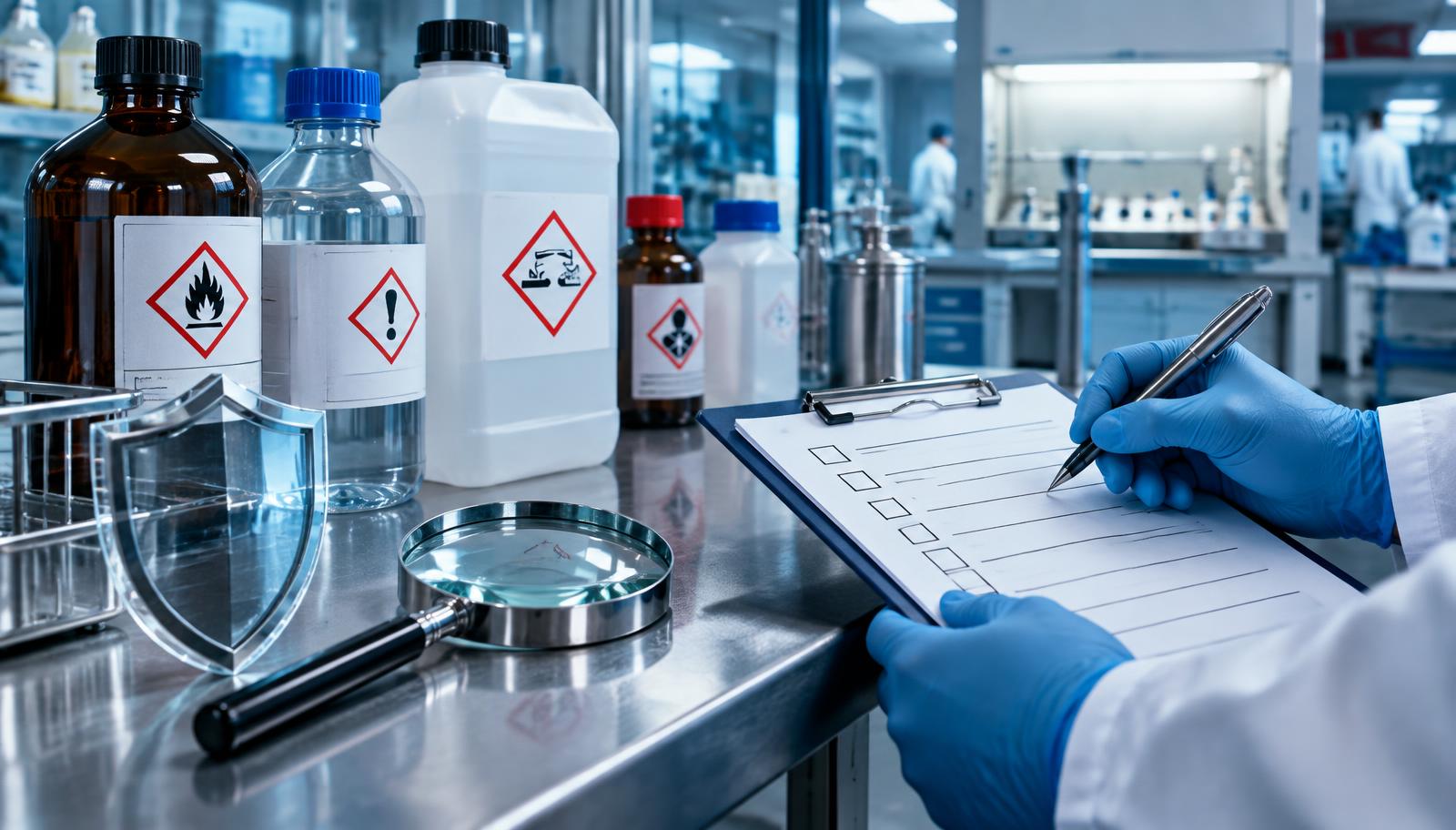
In today's rapidly changing regulatory environment, every company working with chemicals needs to comply with chemical safety requirements. What exactly is a chemical safety audit, and why should you arrange one? This article presents the audit process, its benefits and its importance.
What do you receive after a chemical safety audit?
- an overview of your company's role in the chemical supply chain;
- a list of missing, outdated or contradictory documents;
- a prioritised action plan showing what should be fixed first;
- recommendations on which safety data sheets need preparing, translating or updating;
- a management summary of the main business and inspection risks.
What is a chemical safety audit?
A chemical safety audit is a thorough assessment of how well a company complies with current legal requirements from a chemical safety perspective. It is particularly useful for company leaders because it provides a comprehensive view of the company's compliance without requiring them to review every relevant regulation individually.
The audit process
- Completing a questionnaire. The first step is to answer general questions about the company's activities. This helps identify the chemicals connected with the business and the processes associated with them.
- Reviewing documents. The next step is a professional review of the company's documents. This includes checking safety data sheets and verifying that the required notifications have been made.
- Preparing an action plan. Based on the findings, we prepare an action plan setting out the steps needed to achieve legal compliance. It helps the company recognise and correct gaps.
| Step | What we assess | Result |
|---|---|---|
| Questionnaire | The company's activities, role in the supply chain and range of chemicals handled | List of relevant substances and processes |
| Document review | Content and currency of safety data sheets and completed notifications | List of missing documents and notifications |
| Action plan | Identified gaps and future time-critical obligations | Prioritised tasks for legal compliance |
Why is a chemical safety audit useful?
| Area | Typical risk | Action after the audit |
|---|---|---|
| Safety data sheets | Missing, outdated or non-localised SDS for the target market | Prepare a new SDS, translate/localise it or update the existing version |
| Labelling | The label and SDS show different classification, pictograms or warnings | Align the label with CLP and the current SDS |
| Internal records | It is unclear which document version belongs to which product | Put version tracking and the document library in order |
| Occupational safety | Employees are trained from outdated hazard information | Update training materials and risk assessment documents |
Identifying and correcting gaps
One of the audit's greatest benefits is that it provides a practical view of gaps in the company's operation. Whether the issue concerns the general duties of users, distributors, manufacturers or importers, the audit shows exactly where action is needed. This helps prevent breaches and the fines that may follow.
Employee safety
Following chemical safety requirements is not only a legal obligation; it also protects employees' health. An audit helps ensure that the company has provided suitable protective equipment, stored and handled chemicals correctly and trained employees in their safe use.
Business continuity
A well-conducted audit helps a company identify in good time which tasks have deadlines and which future legislative changes may affect it. This helps products remain continuously available and avoids potential production stoppages or distribution barriers.
How should you get started?
If a chemical safety audit may be timely for your company, . Our colleagues will be pleased to help you start the process. A common starting point is putting the documentation in order; our safety data sheet preparation guide explains this in detail.
In summary, a chemical safety audit is an investment that can deliver significant long-term benefits. It supports not only legal compliance, but also employee safety and business continuity.
Éva Juhász
Éva Juhász is a chemical engineer, certified chemical safety inspector and head of regulatory affairs at InnovaTox. She worked for 13 years as a chemical safety inspector and head of public health at the Veszprém County Institute of the Hungarian public health authority. She has 25 years of regulatory and consulting experience and has prepared more than 4,500 safety data sheets and notifications.
Last updated:
Frequently asked questions
- What is a chemical safety audit?
- It is a thorough assessment of how well a company complies with current legal requirements from a chemical safety perspective. It is particularly useful for company leaders because it gives them a clear overview without requiring them to review every relevant piece of legislation individually.
- When is it appropriate to arrange an audit?
- An audit is timely when a company introduces a new chemical or product, changes its activities or suppliers, may be affected by legislative changes, or is unsure whether its existing documentation is complete. It is also worth carrying out before an official inspection.
- What needs to be prepared for the audit?
- Prepare basic information about the company's activities, a list of the chemicals used and supplied, their safety data sheets and documentation of previous notifications. These items are reviewed as part of the questionnaire.
- What does the action plan contain?
- The plan sets out the steps needed to achieve legal compliance: which documents are missing or need updating, which notifications must be completed, and the order in which the work should be done.
- Which gaps does an audit commonly reveal?
- Common findings include outdated or missing safety data sheets, incomplete internal records, differences between labels and safety data sheets, and general duties missed by users, distributors, manufacturers or importers.
- Why is it worthwhile beyond legal compliance?
- Following chemical safety requirements protects employees' health and supports business continuity. Identifying time-critical tasks early helps products remain available without production stoppages or distribution barriers.